
Day 1: Oak and Morning Quiet
Begin the morning at Honest Coffeehouse on Bogenbai Batyr Street. The light here is filigreed—late-spring sun slants through high windows and pools on a communal oak table. The espresso is bright and clean; the crema carries a warm, toasty note. Sit with a light jacket or scarf folded over the chair back, fingers warmed on a ceramic cup as the café’s acoustics remain hushed: conversations are low, cut through only by the soft grinder. The interior pairs raw plaster with lacquered oak shelves—there is a restraint to the surfaces that lets the wood sing.
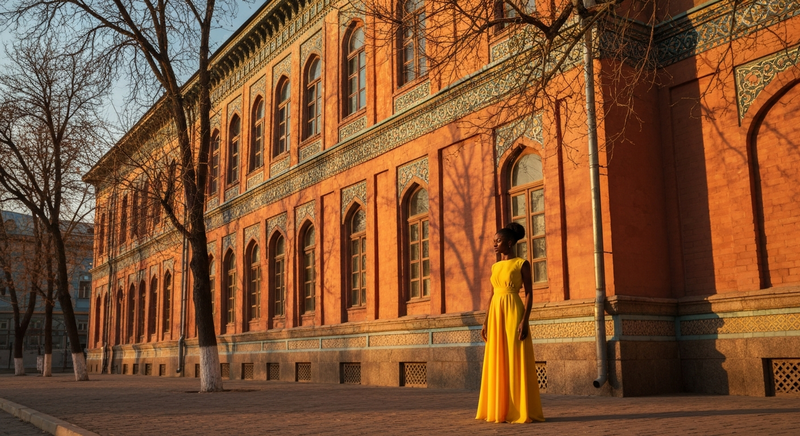
The walk to Panfilov Park takes you along tree-lined Furmanov, past low storefronts and tram lines; it is an easy ten-minute promenade. In the park the wooden silhouette of Zenkov Cathedral stands saturated with colour against the mountain shadow. For the afternoon, cross the Almaty streets by a short taxi ride to the A. Kasteev State Museum of Arts—its galleries feel cool and dry, the walls a linen white that lets carpets and embroidery read as texture rather than ornament. The hush of footsteps, the slight echo between rooms, and the way light pools on a painted cashmere robe in a display case make for a quietly tactile visit.
As evening falls, dine at Nuala. The dining room is lit by low pendants; velvet banquettes and oak tables create intimate bays. Begin with a plate of baursak and smoked kazy—served warm from a stone-lined hearth—and move to a slow-cooked lamb finished with local herbs. The sommelier brings a white that is crisp with a mineral finish; the dining room’s acoustics tighten as the city outside dims. For a post-prandial walk, head toward Republic Square—streetlamps throw long lines across the granite, and the night is calm enough to hear distant traffic like a low tide.
Day 2: Concrete and Cable-Car Silence
Begin the morning at Bowler Coffee Roasters near the Green Bazaar on Kabanbai Batyr Street. The roast is precise; a pour-over reveals citrus top notes and a velvet mid-palate. The café’s interior is spare—polished counter, cork-topped stools, and an ash shelf of single-origin packages. Outside, the market air blends cumin and fresh herbs; a breeze from the foothills carries a pine-tinged clarity that feels almost alpine.
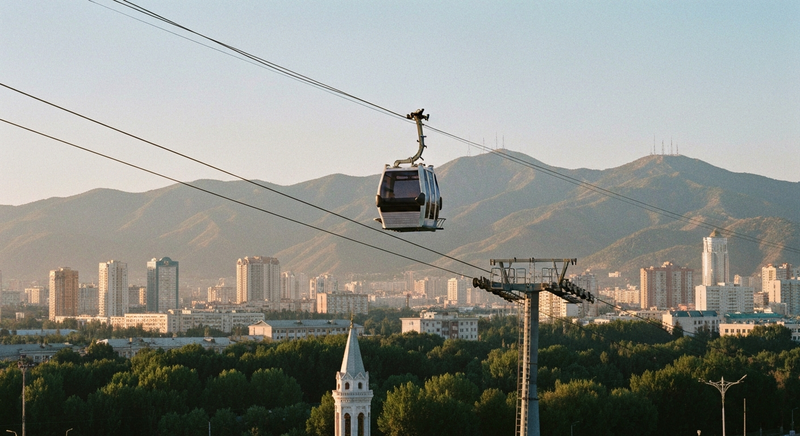
From the bazaar take a taxi to the base of the Kok-Tobe cable car—it’s a sensible short drive rather than a long walk. The ascent is an exercise in changing textures: city stone recedes and gives way to pine and bare rock; the cable-car windows frame a slow reveal of the valley. On the hill, paths are lined with weathered timber benches; the panoramic quiet is punctuated by the soft creak of wood. For an afternoon excursion, return toward the city and then take a separate taxi up to the Medeu valley to feel the air tighten and the light sharpen—there is a briskness to the altitude, and the ice rink’s perimeter sits behind low stone walls.
As evening settles, reserve a table at Seven Bar and Restaurant for its sweeping city view. The room leans into dark timbers and low brass lighting; plates arrive with concentrated flavours—shashlik threaded with smoky lamb, a restrained plov, and crisp baursak. After dinner, take a short taxi down to Bee’s Knees Bar on Kunaev Street for a nightcap. The bar’s interior is low-lit velvet and oak; cocktails are made with a practiced restraint. The soundtrack is soft, glassware clicks quietly, and the city’s edge feels distant enough to be atmospheric rather than intrusive.
Day 3: Cashmere and Evening Panorama
Begin the morning in Samal, where the city opens up and the pace drops a notch. Start at Cafeteria del Mar Almaty for a quiet, late breakfast or espresso. The space is generous and composed—pale stone, linen seating, wide glazing that lets the light spill across the floor. Coffee is clean and unshowy; the pleasure comes from scale and calm rather than caffeine theatrics. It’s a place that allows the day to arrive slowly.
Late morning is devoted to texture and contemporary craft. Take a short taxi to Korkem Experience Store, a genuine concept showroom where Kazakh design is presented with restraint: folded textiles, ceramics, and objects that emphasise material over decoration. Nearby, Moonshuaq offers a more fashion-led counterpoint—modern silhouettes rooted in local references, fabrics handled deliberately rather than displayed for spectacle. If time allows, add BEEPL Space, a collective of independent designers that feels lived-in and current.
For lunch, take a taxi slightly off the obvious routes to Qaimaq. This is Kazakh and Central Asian cooking done with confidence: a shaded, composed setting; service that doesn’t over-explain; dishes built on depth. Order manty or beshbarmak if available, and let the meal take its time. Tea arrives strong, poured without ceremony.
The afternoon belongs to altitude and air. Head up to Medeu, and if the weather is clear continue gently toward Shymbulak. This isn’t about activity but atmosphere: cooler temperatures, sharpened light, stone paths and pine moving in the wind. Sit briefly, do very little, then return to the city before dusk.
For the final evening, choose a new, quieter luxury register. Book dinner at Vista Restaurant & Bar—still elevated, but calmer and more inward-looking than the skyline drama you’ve already had. Expect disciplined plating, excellent glassware, and a dining room that values space and silence. Alternatively, if you prefer something more intimate and locally rooted, reserve at Auyl, where traditional forms are reworked with a sense of place rather than performance.
End the night with a slow walk back through Samal or along Dostyk as the pavements cool. The air carries a mountain edge again; a light scarf earns its keep. Traffic hums at a distance, façades glow softly, and Almaty closes the trip in its most convincing register: composed, tactile, and quietly assured.


