
Day 1: Dolomite Stone and Woolen Light
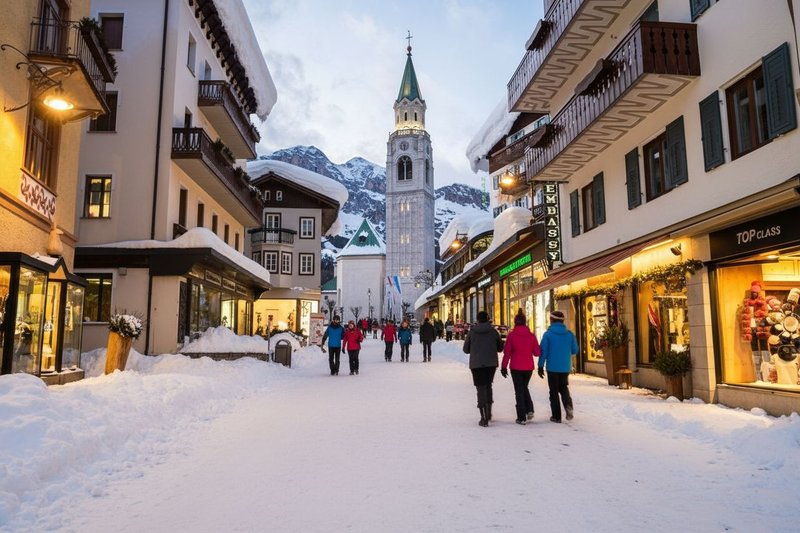
Begin the morning at Pasticceria Alverà on Corso Italia. The shopfront catches the first pale sun that slides across the Ampezzo valley; light falls in strips across a marble counter and timber display cases, warming the foil on warm brioche and krapfen. Order a lungo and a warm krapfen — the scent of browned butter and sugar hangs in the air. The acoustics are hushed: conversations softened by wool coats hung on a brass rail, the faint scrape of porcelain against saucer. Outside, the bell tower cuts a clean silhouette against the Dolomites; the air smells of cold stone and a hint of wood smoke.
The walk from the pasticceria along Corso Italia is short and composed — cobbles stepping down toward shopfronts framed in dark larch. Pause at Bar Dolomiti for a mid-morning espresso; the counter and tiled floor make the cup feel tactile and substantial. Continue to the Regole d'Ampezzo civic rooms to see local alpine artifacts: polished cabinets, mountaineering hardware, and the cool concrete of the museum stair. The stroll between venues is pleasant and brief; luggage is unnecessary, but a cashmere scarf will be welcome against the mountain breeze.
As evening arrives, take a short ride up to Baita Fraina, just above town, and ask for a table with a view — the kind where lamplight and snow-glow (or summer dusk) soften the Dolomite profiles beyond the glass. Inside, it’s mountain-chic rather than rustic: oiled timber, pale stone, and deep, quiet seating warmed by wool. Start with casunziei alla rapa rossa — beet-filled ravioli slicked with sage butter — then move to polenta with porcini and a slice of local speck, with a glass of Lagrein to keep the edges warm. The room stays low-lit and intimate, cutlery speaking softly against plates while the valley falls silent outside. Afterwards, head back into the center and finish at Faro Cocktail Bar at Largo Poste for a calm digestif beneath the portico by the post office.
Day 2: Larch Grain and Candlelit Quiet
Begin the morning at Bar Dolomiti, where light is quieter, filtered through small-paned windows. The counter is cool to the touch, the espresso bright and slightly caramel; behind the glass, pastries sit on wooden boards. The room is compact and intimate — voices low, boots whispering on tile. Wrap a wool coat tighter; outside, the scent of pine resin drifts in from early arrivals headed for the lifts. Take an extra minute to watch how light sketches the grain of a chair: it is the kind of detail that defines Cortina.
By mid-morning hail a taxi for the ten-minute drive to El Brite de Larieto, just outside town. The road threads through a larch forest; resin and damp earth scent the car as you arrive. Lunch at El Brite is informed by the forest: try canederli al burro e salvia (bread dumplings with sage butter) or roasted venison, served on rough-hewn tables with a woolen throw folded across the bench. Interiors favor exposed beams and cool limestone; the low murmur is punctuated by the occasional creak of wood. Afterwards, follow a short marked loop through larch trunks — the path is soft underfoot and framed by light falling in thin columns — a restorative thirty- to forty-minute walk.
Return to town by taxi for a final dinner at an intimate osteria on Corso Italia (reserve ahead). Inside, it’s alpine and welcoming rather than hushed: honeyed timber, a pale stone pillar, wine bottles lined along wooden shelves, and warm light that pools over white tablecloths and set glasses. Start with a primo that fits the place—Tagliatella della nonna in a deer ragù with aged Grana, or the Acquerello risotto with Lagrein reduction, pumpkin and crisp guanciale—then follow with low-temperature braised venison with juniper and red fruit, finished with a taleggio polenta cream. End on something simple and comforting—tiramisù or crème brûlée—and, if you want the last note to linger, a small glass of Passito di Pantelleria. Outside, the air is cold enough for visible breath; the walk back is all texture—frost underfoot, wool at your throat, and the Dolomites holding their quiet overhead.

